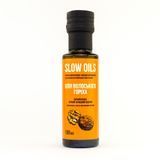
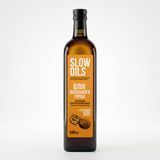
At Slow Oils, we produce walnut oil from light-colored kernels. As explained in our brand materials, lighter kernels provide a more delicate flavor and result in a more refined oil.
What makes walnut oil special
Walnuts themselves have a complex flavor profile: slightly sweet, creamy, with a hint of bitterness and a warm nutty aroma. In cold pressing, these notes carry over into the oil. That is why it is rarely used for frying, but rather as a finishing touch.
Walnut oil works best in dishes with balance — acidity, sweetness, saltiness, and texture. For example, a salad with greens, pear, soft cheese, and a few drops of walnut oil instantly feels more restaurant-quality. The same applies to roasted beets, goat cheese, pumpkin, pasta, or toasted bread.
What to know about Omega-3
Walnuts and some plant oils contain alpha-linolenic acid (ALA), a form of Omega-3. The NIH Office of Dietary Supplements explains that ALA is an essential fatty acid, meaning the body cannot produce it and must obtain it from food. However, ALA is a plant-based form of Omega-3, while EPA and DHA are mainly found in fish and seafood; the body converts ALA into EPA/DHA only in small amounts.
So it is more accurate to say: walnut oil can be part of a balanced diet that includes sources of unsaturated fats. It is not about making health claims — it is about honest positioning: a flavorful, unrefined oil that adds character to dishes and diversifies plant-based fat sources.
7 ways to use walnut oil
1. Salad with pear, cheese, and walnut oil
Mix arugula or salad greens, thin slices of pear, soft cheese, a few walnuts, and a teaspoon of walnut oil. Add a bit of lemon juice or apple cider vinegar. A simple salad that feels like a restaurant dish.
2. Roasted beetroot with walnut dressing
Roast beetroot, slice it, add salt, a bit of honey, lemon juice, and walnut oil. Top with feta or goat cheese. The oil enhances the natural sweetness and adds depth.
3. Pasta with walnut oil and herbs
Cook pasta, add a bit of pasta water, herbs, Parmesan or another hard cheese, and a teaspoon of walnut oil at the end. Do not overheat — add just before serving.
4. Toast with soft cheese
Toast bread, spread cream cheese or ricotta, add a few drops of walnut oil, honey, and crushed walnuts. A quick breakfast or light snack.
5. Sauce for roasted carrots or pumpkin
Mix walnut oil with lemon juice, a pinch of salt, black pepper, and a drop of honey. Drizzle over roasted vegetables.
6. Porridge or granola
Add a few drops of walnut oil to oatmeal, buckwheat, or granola. It adds a warm nutty aroma and pairs well with apple, honey, cinnamon, and dried fruits.
7. Dessert with vanilla ice cream
Unexpected but highly gastronomic: a few drops of walnut oil on vanilla ice cream, a pinch of salt, and crushed nuts. A similar approach is used with pumpkin seed oil in Austrian cuisine.
How to store walnut oil properly
Nut oils are sensitive to light, heat, and oxygen. Store the bottle tightly closed in a cool, dark place, and after opening, preferably in the refrigerator. UC Davis materials note that dark or opaque packaging reduces light exposure, which accelerates oxidation.
Why this oil fits premium cuisine
Walnut oil does not mask a dish — it enhances it. You only need a small amount. That is why a bottle of walnut oil becomes not just a cooking fat, but a culinary tool — for salads, cheese, appetizers, sauces, and gift sets.
Slow Oils produces this oil in small batches, with decantation and gentle filtration. This reflects our philosophy: slow production, чистий смак (pure taste), and respect for Ukrainian raw materials.
What is walnut oil used for?
Best for salads, cheese, roasted vegetables, pasta, cereals, toast, and desserts.
Can you fry with walnut oil?
It is better used as a finishing oil to preserve flavor and aroma.
What does walnut oil taste like?
It has a mild nutty aroma, light sweetness, and a delicate aftertaste.
Does walnut oil contain Omega-3?
Walnuts and some plant oils contain ALA — a plant-based Omega-3 that must come from the diet.